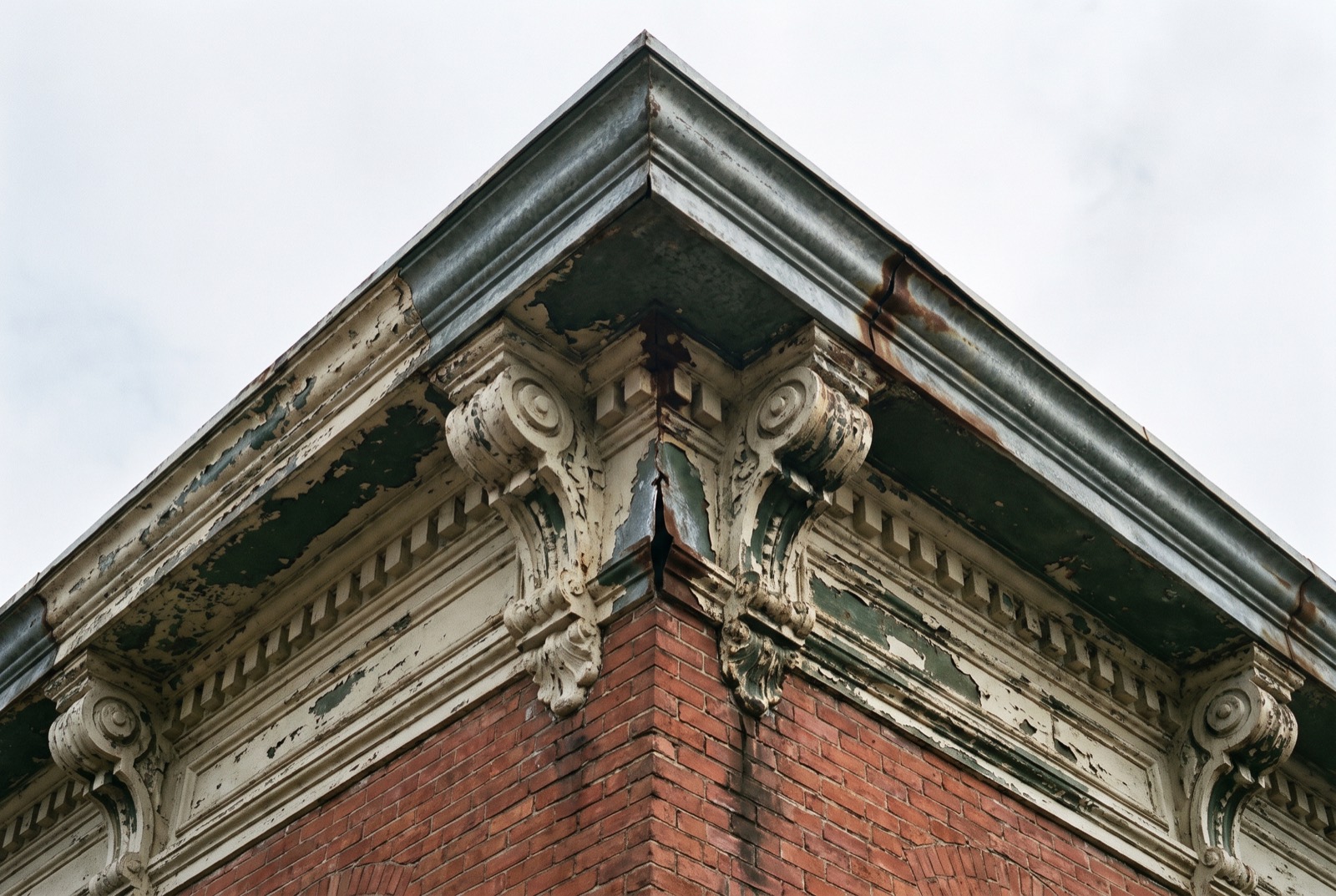
How are the common cornice materials built, and how do they fail?
Older St. Louis cornices are usually corbelled brick, terra cotta, stone, pressed sheet metal or wood, and each tends to fail in its own way. Water is the common thread in almost all of them.
An engineer identifies the material and construction first, because the right repair depends on it.
How is a corbelled brick cornice built?
Courses of brick step outward a little at a time, each held by the weight of the wall above and the courses behind it. Some have metal anchors or ties tucked into the wall.
They tend to fail when mortar erodes, when bricks flake from freeze-thaw, or when water collects at the top and soaks the joints. Outer bricks can loosen and drop.
How is a terra cotta cornice built?
Terra cotta is fired clay, usually made as hollow units. They are often held to the wall by metal anchors or a steel frame inside the masonry.
Water that enters through cracked glaze or open joints can rust that hidden steel. Rust swells, which can crack the units and push them out. Pieces can look sound while the anchor behind them is not.
How is a stone cornice built?
Stone cornices are made of heavy blocks that project from the wall. Many rely on their own weight, on the wall above, and sometimes on metal pins or cramps.
Failure often comes from open joints, rusted fasteners, or stone that weathers or splits along its layers. Because the blocks are heavy, a loosened piece is a serious falling hazard.
How is a pressed metal cornice built?
Thin sheet metal is formed into decorative shapes and fastened to a frame of wood or steel on the wall. Many look like masonry from the street.
Seams open, the metal rusts, and fasteners loosen. Wood behind it can rot where water gets in. Sagging, bowing or visible rust streaks can all be signs, and the damage often goes deeper than the surface.
Wood cornices are common on smaller houses and flats. Rot at the joints and at the roof edge is a typical concern, and paint can hide it. Wood can look sound on the surface while it is softening below.
Why does the material matter for repair?
A repair that suits one material can harm another. Replacing hidden steel, for example, is a different job from repointing brick. Our cornice condition assessment identifies the material and the cause, and the cornice repair scope defines the work.
For the basics, see what a cornice is and why it fails.
What should you send us?
Send the address and a few photos from the ground or across the street. We reply within one business day.