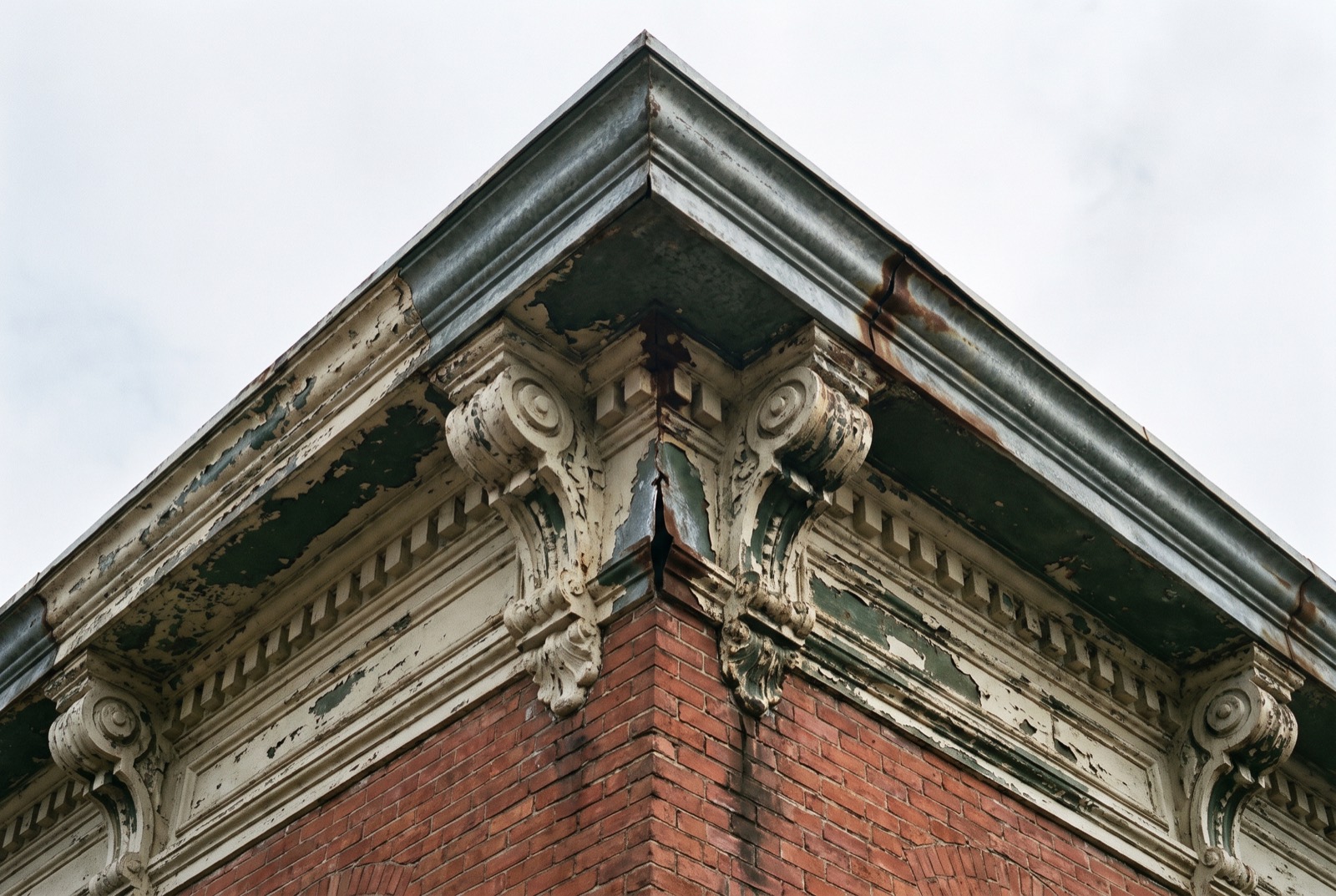
Who should you call first about a cornice problem?
Call an engineer first, before you collect bids. The engineer decides what is wrong and writes a scope, so every contractor prices the same work.
That order matters because a cornice problem can look like a masonry problem, a roof problem or a metal problem, and the real cause may be somewhere else.
What does each trade do?
| Trade | What it does |
|---|---|
| Engineer | Inspects the cornice and the wall behind it, finds the cause, and writes a report with a repair scope. We do not sell or perform repairs. |
| Mason | Repoints mortar, rebuilds brick, resets or replaces masonry units, and repairs stone or terra cotta, though skill with historic materials varies. |
| Roofer | Works on the roof edge, flashing, coping and drainage that keep water out of the top of the wall. |
| Sheet-metal shop | Repairs or fabricates metal cornices, gutters and flashing. |
Larger jobs often need more than one of them.
Why does diagnosis come before the bid?
Each trade sees the problem through its own work. A mason may price new mortar where the water is actually coming from failed flashing. A roofer may replace a roof edge when the anchors behind the cornice are rusting.
If you collect bids first, they will not match, and you cannot tell which is right. With a written scope, the bids compare like with like.
Can a contractor diagnose it for you?
A good one can tell you a lot. But a contractor who diagnoses and then bids benefits from the answer, and you only hear one kind of solution. An engineer has nothing to sell, so "monitor it," "fix the roof edge first" and "rebuild this section" are all fair outcomes. See the cornice repair scope service.
What if something is loose right now?
Keep people out from under it and call. Do not climb up, lean out or pull at it. Temporary protection by a contractor may be sensible while you wait for the diagnosis, but permanent repairs should follow it. If material has already come down, read something fell from my building.
What if you already have a bid?
Bring it. We can tell you whether the proposed work fits what we see. Pressure to sign the same day is a reason to pause.
Also ask the City of St. Louis building and historic-preservation offices, or your own municipality, what applies to your address before work starts.
What should you send us?
Send the address and a few photos, plus any bids you already have. We reply within one business day.
Sources
- National Park Service, Preservation Brief 2: Repointing Mortar Joints in Historic Masonry Buildings: The root cause of masonry deterioration, such as a leaking roof or gutter, should be found and dealt with before repair work
- National Park Service, Preservation Brief 47: Maintaining the Exterior of Small and Medium Size Historic Buildings: A contract proposal should clearly define the work to be done
- City of St. Louis, Building Division: The City of St. Louis Building Division issues building permits
- City of St. Louis, CRO Review FAQs: In a city historic district, exterior work, including repair of decorative trim, needs a permit reviewed by the Cultural Resources Office