Cornice condition assessment.
An engineer's inspection of the cornice and the wall behind it, with a written report.
Request this service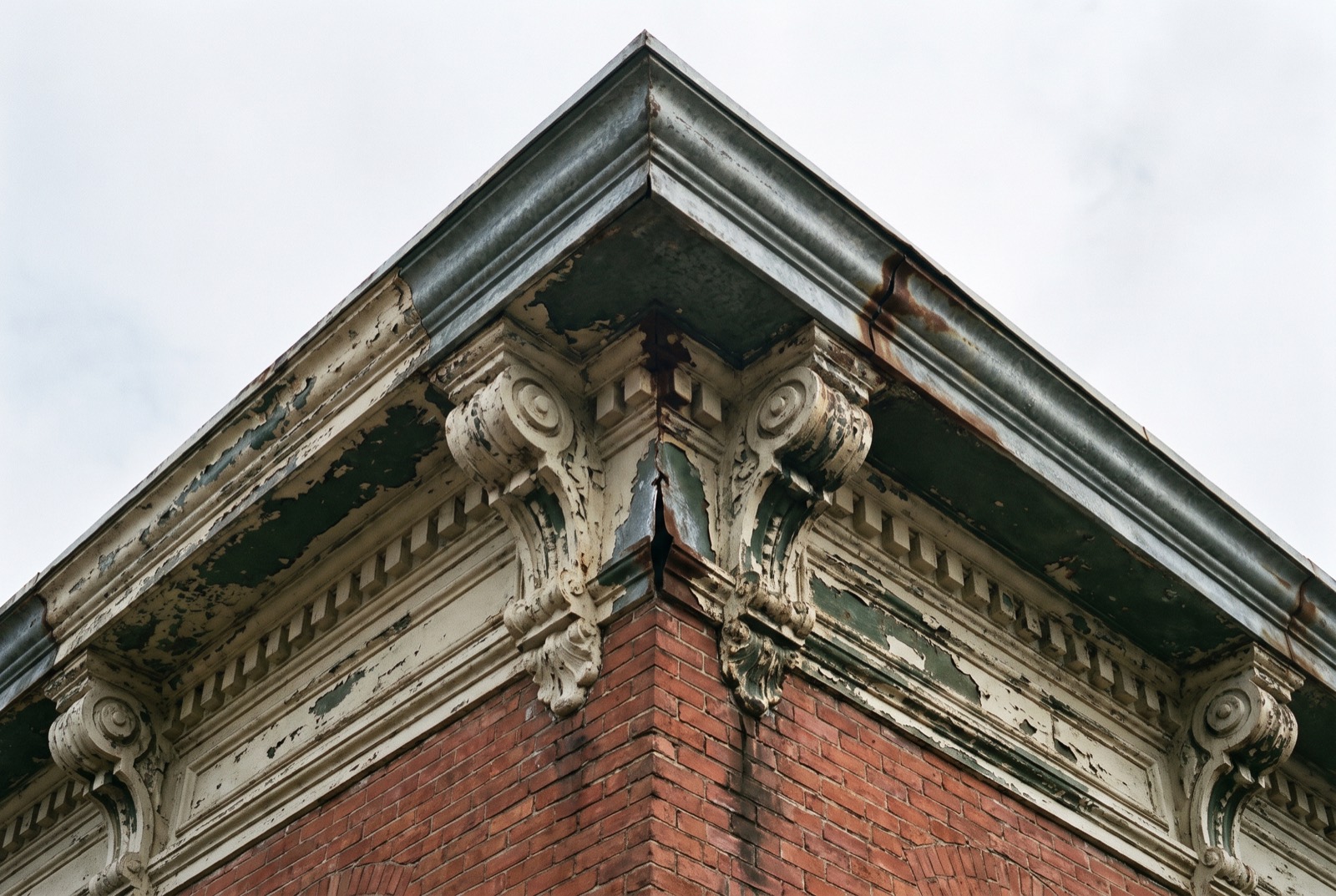
How do you know if a cornice is safe?
You cannot tell from the paint. A cornice is held to the building by mortar, steel anchors, or wood blocking you cannot see from the street, so an engineer inspects how it is attached and what the water has done behind it.
When you need it
- You see cracks, a lean, open seams, or missing pieces
- Rust or water stains run down the wall below it
- A contractor quoted a full replacement and you want a second view
- An insurer, lender, or city office asked for an engineer's opinion
What the engineer looks at
- What the cornice is made of and how it is tied to the wall
- Cracks, gaps, sagging, and pieces out of line
- Rust stains, which point to failing steel behind the face
- The roof edge, gutters, and flashing that feed water into it
- The wall and windows directly below
What you get
- A written report signed by a licensed Professional Engineer
- What is sound, what is deteriorating, and what is urgent
- A repair scope a mason or sheet-metal shop can bid
- Notes on anything that should be made safe first
Common questions
Can it be judged from the ground?
Often a great deal can, with binoculars and a look from the roof. If a lift or scaffold is needed for a close look, you are told before anything is booked.
Does it always need to be replaced?
No. Many cornices need repair in places, not replacement. The report says which parts are which.
Will you tell me if it is dangerous?
Yes. If something is at risk of falling, you hear it on site, along with what to keep people away from.
Read first
Signs a cornice or parapet may be unsafeWhat to look for from the ground, and what to do if something looks loose over a sidewalk.
What a cornice is and why it fails on old buildingsWhat a cornice is, what older ones are made of, and the usual ways they fail.
Brick, terra cotta, stone and metal cornicesHow each common cornice material is built and the ways it usually fails.
Related services
Fallen masonry assessmentWhen brick, terra cotta, or metal has come down: what failed and what else is at risk.
Parapet and chimney evaluationThe walls and chimneys above the roof line, which weather fastest and lean first.
Repair scope for bidsA written scope so every mason and sheet-metal shop bids the same repair.