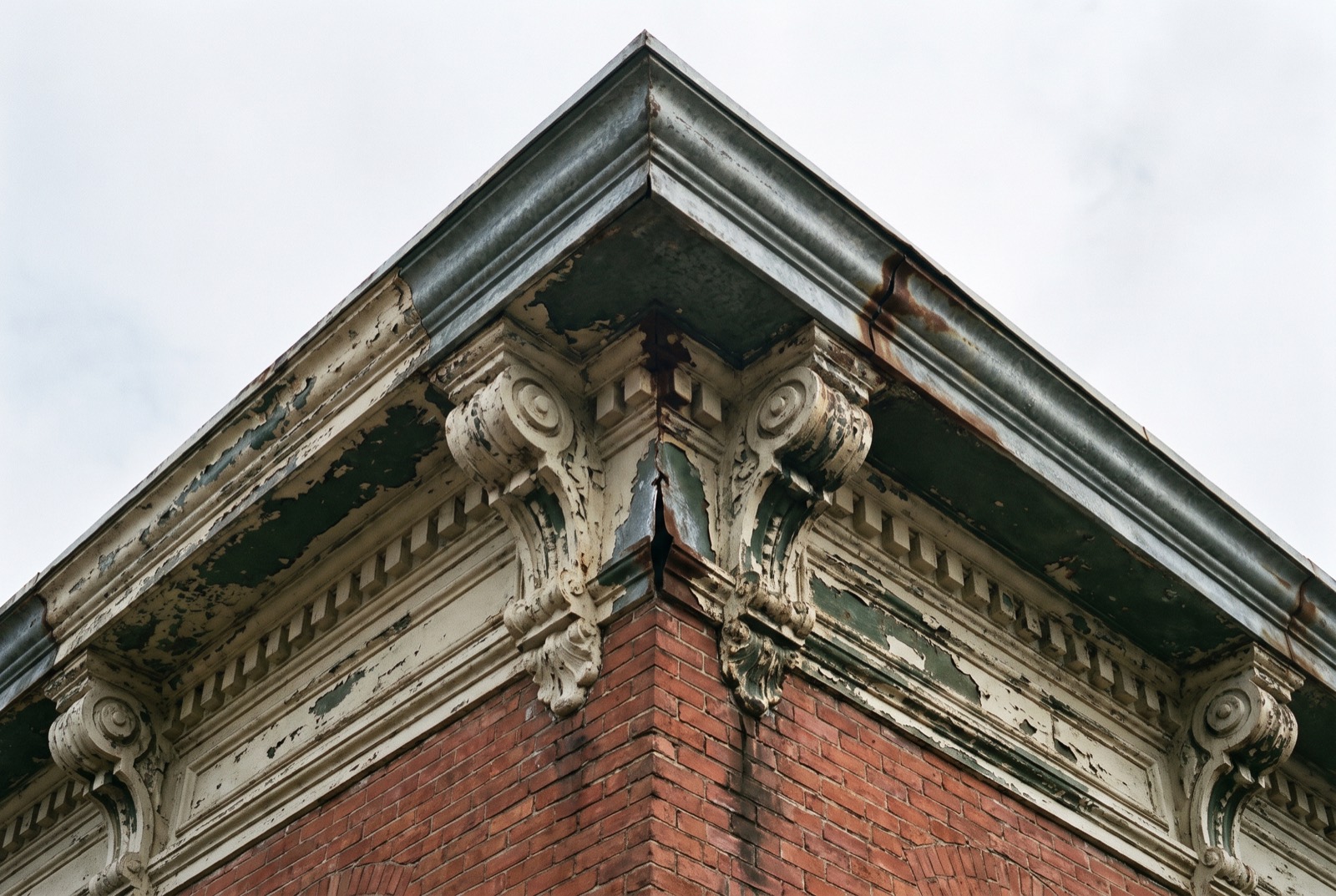
What is a cornice and why does it fail?
A cornice is the projecting band at the top of a wall, where the wall meets the roof. It usually fails because water gets behind it and the hidden parts that hold it in place slowly give way.
Cornices were built to shed rain away from the face of the building. When that stops working, the damage tends to start out of sight.
What are older St. Louis cornices made of?
It varies by building and by age. Common types include:
- Corbelled brick, where courses step outward a little at a time.
- Terra cotta, which is fired clay made in hollow units.
- Cut stone.
- Pressed sheet metal, usually hung on a wood or steel frame.
- Wood, often seen on smaller houses and flats.
Many buildings combine two or more. See brick, terra cotta, stone and metal cornices for how each is built.
How does water damage a cornice?
The top of a wall is the most exposed part of a building. The roof edge, gutters, flashing and the cap on the masonry all have to keep water out, and over decades they wear.
Once water gets in, it can:
- Soften mortar until joints crumble.
- Rot the wood blocking and framing behind metal or wood cornices.
- Rust steel anchors and lintels buried in the wall. Rusting steel swells, which can crack masonry and push it outward.
- Freeze and thaw inside the masonry, which can flake the faces of brick and terra cotta over many winters.
Why does deferred maintenance matter so much?
Most cornice failures are slow. An open joint or a failed piece of flashing lets in a little water in every storm, and the damage usually grows quietly.
Past repairs can also hide the cause. A coat of paint or a surface patch can cover a metal piece that is still rusting underneath.
Is a cracked or sagging cornice dangerous?
It can be. Pieces that are cracked, shifted or sagging may fall, and a cornice over a sidewalk or entrance puts people at risk.
Do not climb up, lean out, or pull at anything to test it. Keep people from standing underneath and get it looked at. See signs a cornice or parapet is unsafe.
What does an engineer look at?
We look at the cornice and the wall behind it, because the cause is often in the wall, the roof edge or the hidden anchors rather than in the piece you can see. Our cornice condition assessment ends in a written report with a repair scope. We do not sell or perform repairs.
What should you send us?
Send the address and a few photos taken from the ground or across the street. We reply within one business day.